Who needs to know whats going on anyways?

Who needs to understand what’s going on anyway?

This will be my final blog entry for now, so I thought I would end it with a lighthearted story about me attempting to watch the film Ponyo in Japanese.

Going into this, I was feeling confident. I knew I was not going to understand everything, but at the time I knew around 400 words, so hopefully I could follow along.

Boy was I wrong. I picked Ponyo because I had seen it a million times before, in English. I turned on the movie and the charming intro music played. I was feeling good, I was ready, and then they started talking: it was so FAST. My carefully memorized vocabulary felt laughably insufficient. Every character was talking at lightspeed, using a bunch of words I didn’t know, or using such a complicated sentence structure I had no hope of following along.

To put it bluntly, I understood nothing. It looks like I will be saying a lot of ゆっくり話してください (Please speak slowly) when I get to Japan.

I feel like I haven’t touched on whether I’ve actually been achieving the goals I set in my first post, so I’ll talk about that now. I have been studying Japanese for an hour each day, and often more. I am dedicated to my Anki deck, and after I finish my reviews for the day, I practice writing out new sentences with the words I just learned. I started with little direction on where to go in my language learning journey, but now I feel like I have at least a little direction.

I am feeling much better about Japan. Instead of being totally lost in 東京 (Tokyo) I will just be 少し迷った (a little lost).

Thank you for coming on this journey with me!

Bye for now, Max
Learning to Read (again)

Learning to Read (again)

Hello everyone! I have a more fun update for you today. The other day, I remembered something my mom did while I was learning to read. She would make labels and stick them on everything in the house. I remember liking this, so I am trying it for myself.

This afternoon, after school, I went to Staples and bought myself a label maker. When I got home, I immediately set to work. I got out my Anki deck and went through all my cards to find the ones I could use to label the household objects.

Quickly, my house is starting to look like a vocabulary explosion. My fridge now proudly sports a label that says 冷蔵庫 (reizōko), my desk reads (tsukue), and even the toilet has its fancy label, トイレ (toire). It’s honestly pretty funny to see everything labelled like this. I would label people, too, but I’m not sure how happy my brother would be with a label that said いらいらさせる (I’ll leave that one for you to figure out on your own).

Along with what I am already doing, I want to start watching some films in Japanese. As a kid, whenever I was sick, my mom would put on the movie Ponyo, a fantastic film by a Japanese film company called Studio Ghibli. Supposedly, the best way to learn a language is to live in the country where it is spoken (me soon!), and the second-best way is to immerse yourself in as much media in your target language as possible.

All of Studio Ghibli’s films were initially made in Japanese before being dubbed into English, so I think I will start watching them. Another thing I found interesting was that it is not good to watch a show in your target language with English subtitles. There is a concept in linguistics called comprehensible input. To learn a language effectively, your brain must figure out what is being said from the limited amount you understand, and having subtitles defeats that!

That’s all for now! Thanks for tagging along (pun intended)

Bye for now, Max

Remembering the Kanji

Hello!

My Japanese studies have been going quite well! Unfortunately, to get to the real meat and potatoes of what I have been up to, I need to frontload this blog post with some brief context for how the Japanese alphabet works.

Basics of Japanese

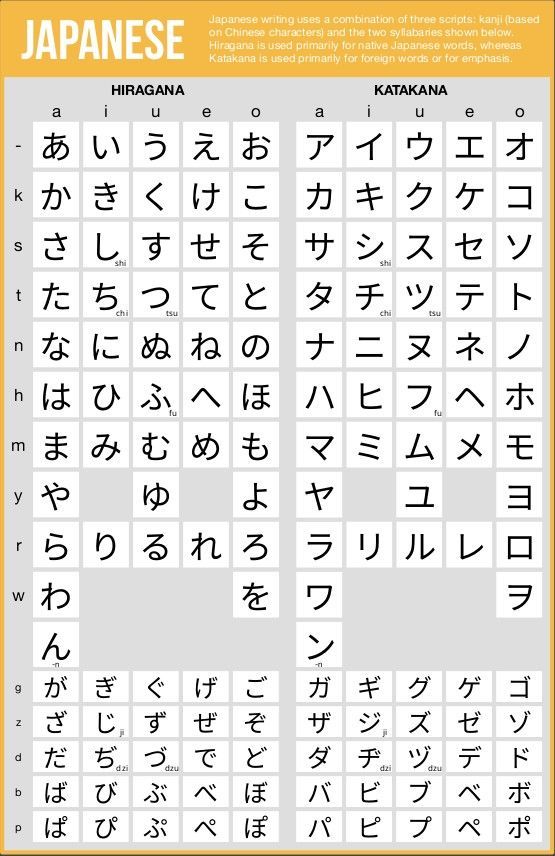
To follow my Japanese learning journey effectively, you must be familiar with some basic concepts and information about the language. Arguably, the most important of these is the three writing systems used: Hiragana, Katakana, and Kanji. The first two are almost trivial compared to the last.

Japanese people write phonetically; each sound that makes up a word translates directly to a character on paper (unlike English, where the letter ‘e’ can make seven distinct sounds). For example, the Hiragana character ‘か’ makes a “ka” sound.

Katakana is the same as Hiragana, but is only used for loanwords in Japanese; there is no difference heard when speaking. For example:

  • Katakana: “インタネット” (internet), pronounced in-ta-ne-to

  • Hiragana: “こんにちは” (hello), pronounced ko-ni-chi-wa

I will include a picture of the charts for these writing systems, but you do not need to know them to follow along!

The final writing system, Kanji, is the most challenging of the three. It is logographic—each character represents a specific word with a specific pronunciation. To be considered functionally literate in Japan, you must know at least 2000 Kanji. This is what I believe will be the most challenging part of my learning journey.

Mnemonics

Over the last few days, I have been gradually adding words from word lists online into my personal Anki flashcard deck. When I first started reviewing my cards, however, I found that I was really struggling to remember the kanji associated with a word.

I went online to try to see if anyone had any tips, and came across a suggestion from a user on a Japanese learning forum: mnemonics, a word I only need 3–5 tries to spell. What it is, at its core, is just like a little story to help you remember something. The idea being, that it is harder for our brains to recall something in isolation, rather than like a story. It’s a lot like creating memories for each word.

Currently, I am learning about twenty new words a day with Anki, and ever since I started making mnemonics for each word, my retention rate from day to day went from 72% to 94%! At this rate, by the time I leave, I will know over 1500 words!

Sign Off

That’s all I have for right now! I’m sorry this post was so focused on making you understand how the Japanese writing system works, but I promise it will save you a ton of confusion down the road!

Bye for now, Max

Hiragana and Katakana Chart